
How Often Should You Service Your Car: Complete Maintenance Timeline
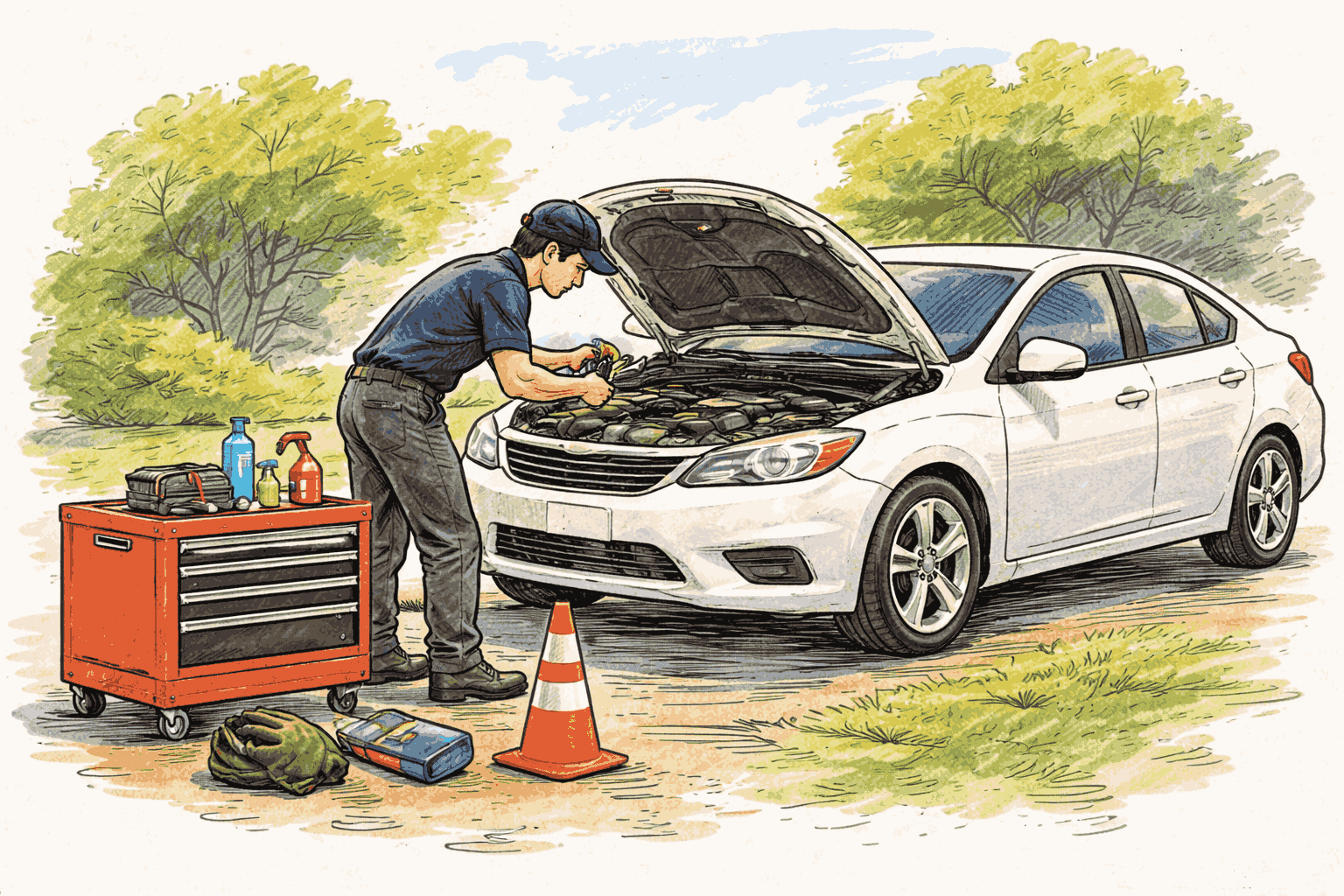
If you have ever asked yourself how often should you service your car, you are not alone. The internet is full of answers, and many of them conflict.
Some people swear by a strict mileage rule. Others only go when the dashboard tells them to. Some service the car once a year no matter what. And somehow, all of them sound confident.
This post is here to clear it up without turning your life into a spreadsheet.
We will explain how often does a car need a service, when should you service your car in real life, and how to use a car maintenance schedule by mileage without overthinking it.
The quick answer: how often should you service your car depends on whether you follow a time based or mileage based schedule. Most vehicles need routine service every six to twelve months or every several thousand miles, whichever comes first. Your owner's manual is the best reference for your specific car, so start there and adjust based on how and where you drive.
Quick Takeaways
- If you want the simplest default, service by mileage if you drive a lot, and by time if you drive very little.
- Your owner's manual is still the highest authority, but you can use general intervals as a planning baseline.
- Major milestone services exist for a reason. They catch wear before it becomes a breakdown.
- A routine you actually follow beats a perfect plan you forget.
Typical Service Rhythm
- Every 6 to 12 months
- Every 5,000 to 10,000 miles
- Major checks at 30k, 60k, 100k miles
Time Based vs Mileage Based Servicing
Here is the core confusion: mileage is not the same thing as time, but both matter.
If you commute daily, your car service by mileage is usually the cleanest way to schedule maintenance. Wear is driven by miles, heat cycles, and operating hours.
If you rarely drive, time becomes more important. Fluids age. Rubber components can dry and crack. Batteries discharge. Even oil can degrade over time, especially if the car does lots of short trips.
So how often should a vehicle be serviced, time or mileage? For most cars, the recommended maintenance schedule starts with whichever trigger comes first.
In practice, it is whichever comes first. That phrase shows up in owner manuals and dealership guides for a reason. It keeps you from accidentally going years without checking basic items because you do not drive much. Building a car maintenance schedule by mileage is the easiest starting point if you drive regularly, since your odometer gives you a clear trigger.
Typical Service Intervals as a General Guide
Let's keep this realistic. There is no single interval that fits every vehicle.
Still, people search "how many miles between services" because they need an anchor.
A good way to think about it is to separate routine service from milestone service.
Routine service is the stuff that keeps the car stable week to week, like inspections and regular fluid changes.
Milestone service is what happens when you hit big mileage points and multiple systems need attention at once.
Chevrolet's Certified Service guidance offers a clear example of routine maintenance pacing, recommending an oil and filter change every 7,500 miles, and framing maintenance reminders by mileage ranges and common wear items.
You should not copy any single brand's intervals blindly, but this gives you a practical sense of how manufacturers design schedules: frequent routine checks, then deeper service as mileage increases.
How Many Miles Between Services Is Normal
The honest answer to how many miles between services is normal is that it depends on the car, the oil spec, and how you drive.
For most modern vehicles using synthetic oil, routine service typically falls somewhere in the 5,000 to 10,000 mile range. Vehicles with conventional oil or older engines may need attention closer to 3,000 to 5,000 miles.
Driving conditions shift these numbers. Frequent short trips, extreme temperatures, towing, and stop and go traffic all count as harder use. In those cases, shorter intervals are safer even if the dashboard has not triggered a reminder yet.
The safest approach is to use your manufacturer's recommendation as a baseline, then shorten it if your driving skews toward "severe service." If you are ever unsure whether you have stretched too far, that is usually a sign to schedule it now rather than wait.
Thirty Thousand, Sixty Thousand, and One Hundred Thousand Mile Services Explained
This is where most "car service intervals explained" content either gets too vague or too overwhelming.
Here is the mental model: at these milestones, you are not just changing one thing. You are preventing your first "expensive surprise."
SoCal Auto Care's milestone maintenance breakdown explains what typically happens at each major mileage point, from filter and fluid refreshes at 30,000 miles to spark plugs and transmission service around 60,000, and timing belt or water pump attention near 90,000. It also reinforces that tire rotation should happen more frequently than the big milestones, often in the 5,000 to 7,500 mile range.
So what does this mean for you?
At around thirty thousand miles, you are typically doing preventive care. Inspections, filters, and fluid checks, plus catching early wear.
At around sixty thousand miles, you are often refreshing more systems, and you may start seeing real wear items show up, like brakes, tires, and certain fluids.
At around one hundred thousand miles, you are thinking longer-term reliability. Some vehicles need major items around this point, and even if yours does not, it is a smart time to do deeper inspections.
The exact list varies wildly by model, which is why your owner's schedule matters, but the milestone pattern is real across many brands.
What Maintenance Does a Car Need Regularly
Let's answer the keyword directly: what maintenance does a car need.
Most drivers can stay out of trouble by paying attention to a small set of recurring systems.
Engine oil and filter is the obvious one.
Tires, including pressure and rotation, matter more than people admit because tires affect safety, fuel economy, and how your car feels day to day.
Brakes deserve routine inspection before you hear noises.
Fluids beyond oil often get ignored, but they are part of why an older car starts feeling rough.
The point is not to memorize a car service checklist. The point is to build a rhythm where you periodically check the systems that fail quietly, then fail loudly.
If you want to make this routine automatic, creating your own reminders and a simple log helps. A maintenance routine does not need to be complicated, it needs to be consistent.
What Happens If You Skip Service
Skipping service rarely causes instant catastrophe. That is why people keep doing it.
The risk is that small problems become bigger and more expensive, and they show up at the worst time.
If you skip routine maintenance, your car is more likely to become unreliable and more likely to need repairs that could have been cheaper earlier.
If you skip milestone maintenance, you increase the chance of a "stacked failure," where multiple worn items fail close together. That is the scenario that makes people feel like their car suddenly became expensive overnight.
Oil changes are the most common service people delay. If you are curious about how long you can go without an oil change, the short answer is that the buffer is smaller than most people assume.
There is also a resale angle. A documented service history is one of the simplest ways to protect resale value and buyer confidence.
How to Build a Maintenance Routine That Sticks
The best plan is the one you will actually use.
Start with one recurring reminder. For many drivers, that is every six months or every set mileage, whichever comes first.
Then keep a simple service log. It can be a note on your phone, a spreadsheet, or a template you reuse. Our car maintenance checklist and schedule tool lets you generate a service tracker by time or mileage so you are not starting from scratch each time.
If you are also buying a used car where service history is uncertain, running through a used car pre-purchase inspection checklist before committing helps you understand what maintenance may have been skipped.
Conclusion
You do not need a perfect schedule to keep your car in good shape. You need a routine you actually follow. Use your manual as the authority, time or mileage as the trigger, and a simple log so you do not forget. The rest is consistency.