Used Car Checklist: What to Check Before Buying a Used Car
Buying a used car is like swiping right on a dating app — you're hoping for a clean history, but there's a decent chance you're getting ghosted by the truth. If you roll up to a test drive without a checklist, you're trusting your future self to love mystery noises, crusty upholstery, and sketchy paperwork. That's why this guide is your wingman.
We'll cover everything you need to sniff out the red flags: researching the car's past (VINs don't lie, but sellers might), inspecting it head to toe, test-driving like a skeptical mechanic, and sealing the deal without getting swindled. Plus, we'll settle the debate between used car inspections and new car PDIs, because yes, new cars can be weird too.
Quick Takeaways
- A used car checklist isn't optional. It's life insurance for your wallet.
- VIN reports, recall checks, pricing research = your pre-date background check.
- Trust nothing. Check everything. Especially the "fully loaded" seat heaters.
- Test drives are vibe checks. If it rattles or squeals, swipe left.
- Paperwork is the final boss. Don't leave without all the keys, receipts, and receipts for the receipts.
Why You Need a Used Car Checklist Before Buying
Look, skipping a checklist is how you end up with a mystery oil leak and a glovebox full of expired parking tickets. Used car shopping isn't just about shiny paint and Bluetooth. It's detective work.
A good checklist catches problems early: warped rotors, rebuilt titles, a trunk that smells like mildew and regret. It's your power move. You can walk away or haggle the price down faster than a dealership inflates interest rates.
And sure, the seller's got a "clean Carfax," but that doesn't mean the suspension isn't held together with zip ties. Your eyes (and ideally a mechanic's eyes) matter. Dealerships that won't let you inspect the car? That's not a car — it's a trap.
Pre-Visit Research: What to Check Before Seeing the Car
You wouldn't meet a Tinder date without Googling them first, right? Same rules apply here. Pull the VIN and hit up Carfax, AutoCheck, or NMVTIS. You want to know about accidents, mileage shenanigans, and whether the title's seen more drama than a reality show.
Next, check for recalls at the NHTSA recall database, especially the kind that involve brakes or fire. Safety ratings matter too. If the car folded in half in crash tests, maybe don't risk it.
Look up the car's market value (KBB, Edmunds) and scan buyer guides like Consumer Reports for model-specific reliability tips and resale trends. Check its rap sheet of known issues (forums, bulletins, angry Reddit threads). Know what you're walking into.
And if the seller says, "Runs great, just needs a little TLC," assume you're bringing a flashlight, tire gauge, and probably a tow rope.
Used Car Inspection Checklist: Exterior, Interior, and Documents
Time to channel your inner CSI. You're not just kicking tires — you're reading the whole crime scene.
- Bodywork: Mismatched paint? That panel's seen some trauma. Rust bubbles? That's not "patina," that's decay. Uneven gaps? Someone played Lego with the frame.
- Glass & Lights: Cracks, chips, moisture in the lights — basically anything that looks like a haunted house effect? Nope.
- Tires & Wheels: Bald tires = bad news. Uneven wear = alignment issues or suspension gremlins. Bent rims? Someone curb-kissed too hard.
- Interior: Smells like mold? Someone gave it a bath — from the inside. Sagging headliner, ripped seats, seatbelts that click but don't lock? Big yikes.
- Controls: Flip every switch. If the seller says, "That button's never worked," ask what else doesn't.
- Under the Hood: Leaks, crusty fluid caps, frayed belts, or a battery with more corrosion than your group chat? Walk.
- Paperwork: VIN better match. Title better be clean. Service records better exist. If they say "just changed the oil" and can't prove it? Uh-huh.
Grab the full PrepMyList used car checklist to keep your sanity intact.
Used Car Test Drive Checklist: What to Look and Listen For
This isn't a joyride — this is an interrogation. You're the cop, the car is the suspect.
- Startup: Shouldn't sound like a chainsaw. No weird smoke either. Cold starts reveal secrets.
- Acceleration: No lag, no lurching, no drama. If it hesitates or jerks, something's off.
- Shifting: Manuals should feel crisp. Automatics shouldn't feel like they're guessing. Crunching? Slipping? That's your cue to bail.
- Braking: The car should stop straight. No pulling, no grinding, no brake pedal that doubles as a trampoline.
- Steering: If you feel like you're playing tug-of-war with the wheel or it vibrates like a cheap massage chair, something's wrong.
- Suspension: Clunks over bumps = worn shocks or worse. Smooth ride or riot, there's no in-between.
- Final move: Check reverse, test cruise control, and peek under the car for fresh leaks. If something's dripping, so is your enthusiasm.
Final Handover Checklist: Buying a Used Car Without Regret
Before you sign anything, read it. Like, actually read it. If the seller promised repairs, confirm they're done. Extras like spare tires and floor mats? Now's the time to make them magically appear.
Check the paperwork: clean title, correct VIN, signed bill of sale. No "oops, I forgot the registration." That's code for "this car isn't mine."
Get every single key. No, they don't "just use the spare." You want remotes, valet keys, magic fobs — the full key family.
Final check: do another walkaround before you drive off. Any new dents? Mystery scratches? Flat tires? Say something now, or enjoy discovering it later at 11pm.
Pay smart. Bank transfer or cashier's check. Not crypto. Not a handshake. Not Venmo to "some guy."
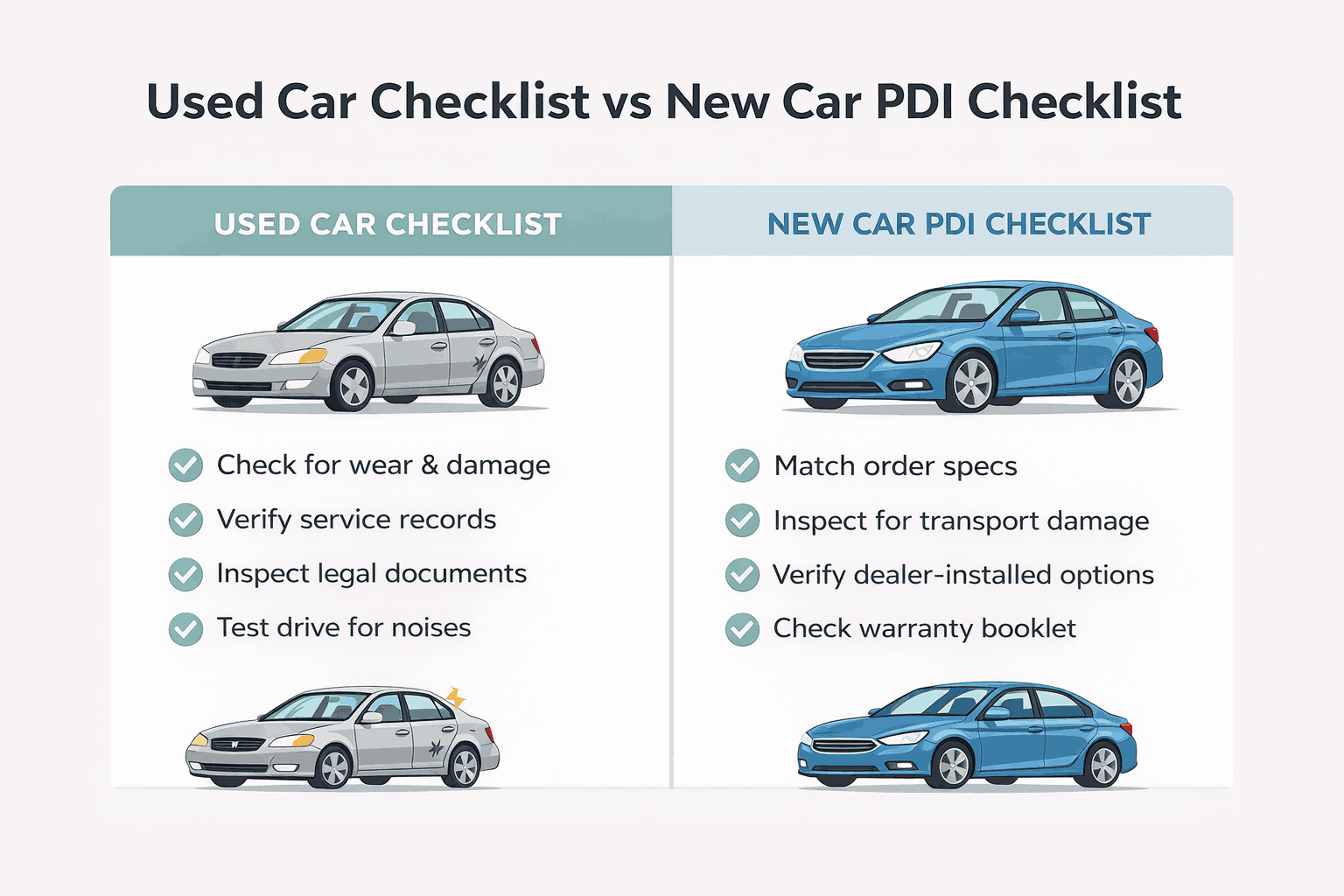
Essentials: Used Car Checklist vs New Car PDI Checklist
Here's the tea: a new car pre-delivery inspection (PDI) is all about making sure the car arrives looking like it came out of the box. A used car checklist? That's for uncovering the chaos it's been through.
New cars should be flawless. Used cars? You're deciding what kind of baggage you're cool with.
New car PDI means checking if all the options you paid for are actually there (spoiler: sometimes they're not). Used car inspection means checking if the bumper's original and whether the oil cap has been used as a coffee coaster.
Want the full side-by-side comparison? Check out PrepMyList's new car PDI checklist. It's like Tinder bios: both have photos and stats, but the red flags are very different.
Conclusion
You don't need to be a car nerd to buy a decent used car. But you do need a system. A used car checklist is how you outsmart rust, regret, and sellers who call dents "character."
Check the history. Check the tires. Check the story. Check the receipts. Test drive it like you're trying to make it confess. And for the love of spark plugs, get the paperwork right.
PrepMyList has your back with free templates. Use them. Share them. Tattoo them on your steering wheel if you have to. (Okay, maybe don't.)
Your next car might not be perfect. But at least it won't be a surprise.