
Passport & Visa Requirements: What Documents You Need to Travel
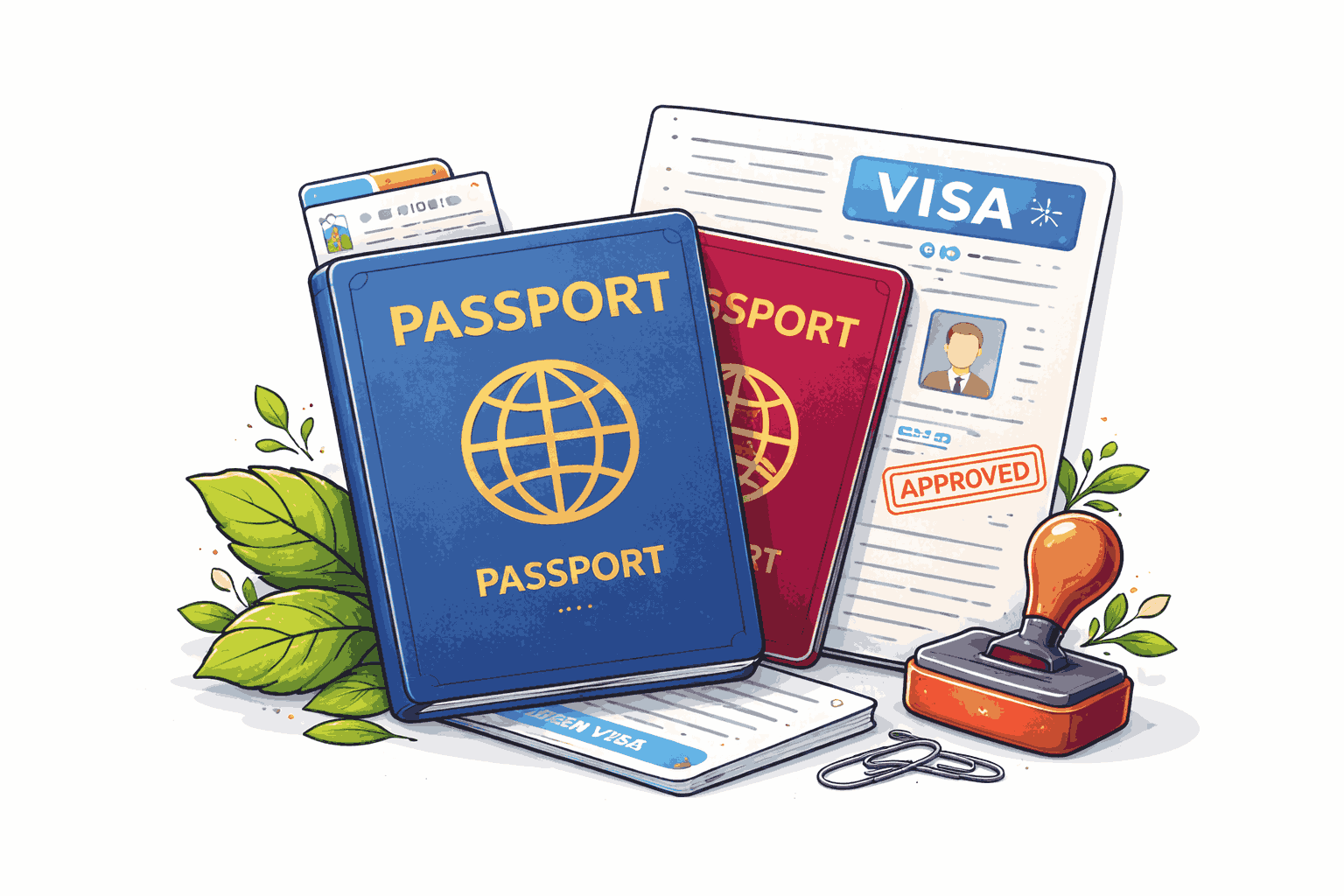
You've booked the flights, scored the hotel deal, and even mapped out where to get the best street tacos on day one. Then, one week before departure, you finally crack open your passport – and your stomach drops. It expires in three months. Surprise: that might not cut it.
If this scenario gives you a cold sweat, you're not alone. Navigating passport and visa requirements is the unsexy side of travel that everyone procrastinates on. We get it: dealing with bureaucracy isn't exactly the highlight of trip planning. But ignoring it? That's how dream trips turn into airport nightmares.
Let's walk through the essentials in plain English. No fluff, no corporate platitudes – just a frank conversation from one avid traveler to another.
By the end, you'll know exactly what documents you need (and why you need them) before you head for the horizon.
Quick Takeaways
Check passport expiration early: Many countries treat passports expiring within 6 months as already expired. They might deny you entry if your passport is too close to expiring. Don't ask why – just renew it in time.
Passport quirks matter: A passport isn't "good-to-go" unless it also has blank pages for stamps and an up-to-date photo that actually looks like you. Small details, big consequences.
Visas aren't one-size-fits-all: "Visa-free" doesn't always mean free of all paperwork. Some countries require an e-visa or online travel authorization even if you don't need a sticker in your passport. Always double-check what exactly you need for each destination.
Schengen rules in Europe: Visiting multiple European countries? Most of Europe is a common travel zone (Schengen) where you can only stay 90 days in any 180-day period without a visa. Overstaying – even by accident – can get you banned. Mark your calendar.
Cruise travel still needs docs: Going on a cruise and heard you "don't need a passport"? Technically, maybe not for certain trips – but if anything goes off-script (medical issue, missed the boat), you'll wish you had it. Always bring a valid passport for cruises, and check if any port requires a visa.
Passport Expiration: Yes, That "6 Months Rule" Is Real
So your passport expiry date is after your trip – you're good, right? Not so fast.
Many countries have a quiet little rule: if your passport expires within three to six months of your travel dates, they don't want you visiting. It sounds ridiculous, but there's logic behind it. They don't want tourists overstaying their welcome or getting stuck with an expired passport abroad. Think of it as a buffer.
Real talk: Airlines will actually bar you from boarding if you fall short of these rules (see the six-month passport validity rule). Ever seen someone arguing with a gate agent about being only "five days short" on passport validity? I have, and it didn't end with them on the flight. Don't be that person.
If you see less than 6 months on your passport's countdown, plan to renew it before you go. Some regions, like the EU Schengen zone, are a bit more lenient (they ask for 3 months beyond your intended departure) – but why flirt with the minimum? Aim for six months everywhere for peace of mind.
Also, check the blank pages in your passport. Yes, that's a thing.
If you're down to your last page and a country wants to give you a big ol' entry stamp or visa sticker, you could be in trouble. South Africa, for example, famously requires at least two blank pages. It's a detail easy to overlook while you're busy counting months on expiry dates. Moral of the story: treat your passport to some breathing room – time and space.
Passport Documents & Photo Requirements
Nobody likes renewing a passport. It ranks up there with doing taxes – a bureaucratic chore we put off until it's almost too late.
Here's the rub: passport processing can take weeks or even months, especially during peak travel times. If you procrastinate, you might find yourself paying through the nose for expedited service or begging a consulate official for a favor.
Save yourself the drama and start the renewal early if you need one. Trust me, future-you will be grateful when the new passport arrives before your departure week.
Now, let's talk about that glamorous passport photo. You know, the one where you're not allowed to smile, and the lighting makes you look like a zombie who just woke up. It's practically a travel rite of passage to hate your passport photo.
Still, those picky rules about photo size, background color, no glasses, no goofy grins – they matter. A bad photo can get your application rejected, or in rare cases, cause a raised eyebrow at border control ("Hmm, this doesn't quite look like you…"). So suck it up and follow the guidelines for the picture.
Pro tip: If you dyed your hair purple or grew a massive beard since your last photo, consider updating your passport. You don't want a customs officer doing a double-take because you had a mid-life makeover.
One more thing on names and such: The name on your passport must match your booking.
Got married and changed your last name, but your passport is still in your maiden name? Either renew with the new name or book your tickets under the old name. Airlines and immigration officers aren't big on "But I have my marriage certificate as proof!" at 6am in the airport. Make it easy on yourself – documents should tell one consistent story.
Visa or No Visa? Figuring Out Entry Requirements
Raise your hand if you've ever Googled "Do I need a visa for [X country]?" and wound up more confused than when you started. Yeah, it's tricky.
Visa requirements can feel like a secret code – one that's different for every nationality and destination pair. The key is to break down the problem: for each country you plan to visit (or even transit through), find out exactly what paperwork (if any) is needed for your passport. No assumptions.
Here's why: People often say a trip is "visa-free" when what they mean is "no advance visa needed." You might not have to go to an embassy or mail your passport in ahead of time, but you could still need to fill out an online form or pay for a visa-on-arrival.
For example, travelers to Vietnam can get a visa on arrival – but only if they arranged a pre-approval letter beforehand. "Visa-free" to Turkey? That turned into an e-visa requirement a few years back for many nationalities, meaning you apply and pay online before your flight.
The United States and Canada have their own twist: citizens of many countries don't need a traditional visa, but they do need an electronic travel authorization (ESTA for the US, eTA for Canada) approved in advance. Skip that step, and the airline won't even let you board. In other words, visa-free isn't always as free as it sounds.
Another common gotcha: layovers. If you're just connecting through a country, you usually don't need a visa, but there are exceptions. Some countries require "transit visas" if your layover is over a certain number of hours or if you switch between international terminals. It's rare, but worth checking.
And if you plan to leave the airport during a long layover (hello, quick city tour!), you're subject to that country's normal entry rules – visas and all.
The best advice here is painfully simple: use official sources for visa info. Airlines have tools to check, and government websites (or reputable visa services) list requirements by nationality. It's not as fun as scrolling travel forums, but it's way more reliable.
Don't rely on what your neighbor or even your travel agent said offhand – rules change, and misunderstandings are common. Five minutes on a country's consulate website can save you from being that poor soul turned away at boarding because surprise! you actually did need a visa.
The Schengen Shuffle: Europe's 90-Day Dance
Ah, Europe – land of café mornings in Paris, pub nights in Berlin, and zero passport checks in between (at least within the Schengen Area). It's almost like a single huge country for travel purposes. Almost.
Here's where people get tripped up: most of Europe (specifically 27 countries in the Schengen zone) has a combined entry rule – you can only stay 90 days total in any 180-day period, unless you have a long-stay visa. It doesn't matter if you hop between countries; they all count toward the same 90 days. Think of it like a shared bank account of days.
Once you "spend" 90 days, you need to deposit 90 days outside Schengen before you can go back in.
If you're an American, Canadian, Brit, Australian, etc. traveling for tourism, you probably won't need a visa for short trips to Europe – but you still have to obey the 90-day limit. This catches a lot of long-term travelers off guard. Spend a semester bouncing around Euro capitals with no plan, and you could inadvertently overstay.
The result? Fines, a very uncomfortable chat with immigration, even a potential ban from re-entering Schengen for a while. Not exactly the souvenir you want.
Also, remember that passport validity rule we talked about? Schengen countries officially require your passport to be valid for 3 months beyond your planned exit date from Europe. So if you're leaving Europe on June 1, your passport better be good through at least September 1.
In practice, savvy travelers still stick to the 6-month rule for Europe just to be extra safe – you don't want to be the edge case that gets nitpicked at boarding.
A quick heads up: the game is evolving. By late 2026, Europe is rolling out ETIAS, an electronic travel authorization system, for visa-exempt visitors. It's basically a small online form and a fee you'll need to sort out before you go. As of today, it's not in effect yet, but it's on the horizon.
So if your Europe trip is in the somewhat distant future, keep an ear out for ETIAS requirements. It'll be one more thing to add to your checklist.
For now, the main thing is to count your days. If you're planning a long Eurotrip, mark day 90 on your calendar and either schedule a flight out or look into getting a proper visa for a longer stay. For a quick official reference, check the official entry requirements for Europe.
Because nothing ends a continental adventure faster than a stern border agent saying you've overstayed your welcome.
Cruise Travel: Passport Optional (But Not Really)
Cruise commercials love to sell the freedom of the seas – just hop on a boat and go! Some even tout that on certain cruises, you don't need a passport at all. For example, U.S. citizens on a "closed-loop" cruise (starts and ends at the same U.S. port) can often travel with just a driver's license and birth certificate. Sounds convenient, right?
Here's the thing: life is unpredictable. If something goes wrong on your international cruise – say you fall ill, miss the ship's departure from a port, or the cruise gets disrupted – you will absolutely wish you had a valid passport on you. Without it, flying home from that random port or even checking into a foreign hospital becomes a colossal hassle.
Cruise lines and seasoned travelers alike strongly recommend having a passport, even if the cruise ticket agent said you technically don't need one.
There's another wrinkle: visas for cruise stops. Just because you're on a cruise ship doesn't mean you're magically exempt from each country's entry rules. Sure, if you stay on the ship at a port, you usually don't go through immigration. But if you plan to disembark and explore, even just for a day excursion, you might need a visa for that country.
Some cruise lines handle group visas or have arrangements – however, don't assume that's always the case. Do your homework for every port of call on your itinerary. If Brazil requires your nationality to have a visa, guess what – you should secure that visa beforehand or you might be having an extended spa day on the ship while everyone else is snapping selfies ashore.
Lastly, even when a passport isn't required to board, the cruise company might still ask for it. They know the risks. In fact, many cruise lines mandate a passport number during online check-in regardless of official rules, because they don't want any issues.
So read that fine print. And even if they don't ask, bring your passport anyway. Pack it in a safe, accessible place just like you would for a flight—a cruise packing checklist can help you stay organized. It's like travel insurance – better to have it and not need it than the other way around.
Essentials: Your Travel Documents Checklist
By now, your head might be spinning with rules and what-ifs. Let's zoom out and put the focus on the essentials you truly need for smooth international travel.
It really boils down to two main things: a valid passport and the right entry permission (visa, waiver, or whatever form it takes) for your destination. If you have those sorted, you're 90% there.
The remaining 10% are the extras that depend on your trip: maybe an international driving permit if you're renting a car, maybe vaccination certificates for certain countries (COVID-19, yellow fever, etc.), and so on. But those two – passport and visa – are the headliners.
"Valid passport" means valid for the requirements of where you're going. Not expiring in 2 months when the country demands 6. Not full of stamps when the country wants a blank page for itself. Good to go, with your name matching your tickets.
If you need to renew, renew in advance. If you need a new photo, do it. This is the one document you do not want to mess around with.
"The right entry permission" means you've checked if you need a visa, an e-visa, an ETA, or nothing at all. And if you need something, you've got it handled. Print out the confirmation or have the visa stamp in your passport – whatever applies. Don't assume immigration can "look it up" in some system. Carry proof.
To make this whole process a tad easier, consider using a travel documents checklist, a carry-on packing checklist, or a trip-planning tool. Input your trip details – where you're going, how you're getting there, how long you're staying – and get a list of exactly what documents and requirements you should be aware of. For hand luggage and airport security, a liquids and toiletries checklist can help you stay within the rules.
Instead of combing through multiple websites and scribbling notes, you get a tailored checklist so you don't forget a thing. Nothing about passport and visa prep should be left to guesswork. Get it sorted early, and you can get back to the fun stuff – dreaming about those street tacos and not about whether you'll get past customs.
Conclusion
Getting your passport and visa ducks in a row isn't the glamorous part of travel. It's the part where you're double-checking dates, filling out forms, and reminding yourself that yes, you do actually have to take that ugly photo. It's tedious. I feel you.
But here's what years of globetrotting have taught me: the dull paperwork stuff is what enables the sparkling adventure stuff. You deal with it so that nothing stands between you and that mountaintop view, that beachside cocktail, or that reunion with far-flung family.
So do the boring bits, and do them early. Check your passport (way ahead of time). Figure out the visa situation (for every stop on your trip). If something's unclear, ask an official source or use a trusted checklist tool. Don't wing it when it comes to legal entry requirements – border agents have exactly zero sense of humor about "oops, I didn't know."
The good news? Once you've handled all these document requirements, you can relax. There's a special kind of peace in knowing you're prepared. You won't be that tired traveler arguing at the counter or frantically Googling embassy numbers.
Instead, you'll breeze through, nodding at the officer with confidence because you know everything's in order. After that, it's all about enjoying the journey. And trust me, that journey is a whole lot sweeter when you're not worrying about whether you'll be allowed to board the plane. Safe travels!